



About Us

About Us

Effective residential inpatient mental health treatment.

Get to know us
Who We Are
  • Staff
  • Our Facilities
Resources
  • Blog
  • FAQ
  • Insurance Verification
  • Reviews
Areas We Serve

Why I should relocate for rehab?

Menu CTA Image
Locations

Locations

Choose from our beautiful locations near beaches & national parks.

888-255-2112
California
  • Orange County
    Tustin, CATustin, CAVilla Park, CAVilla Park, CAOrange, CAOrange, CA
    Location Preview
Tustin, CATustin, CAVilla Park, CAVilla Park, CAOrange, CAOrange, CA
Location Preview
Tustin, CATustin, CAVilla Park, CAVilla Park, CAOrange, CAOrange, CA
Location Preview
Areas We Serve

Why I should relocate for rehab?

Menu CTA Image
Mental Health Disorders
Anxiety Disorders
  • Generalized Anxiety Disorder
  • Panic Disorder
  • Obsessive Compulsive Disorder
  • Social Anxiety Disorder
  • Agoraphobia
Mood Disorders
  • Depression Treatment (MentalHealth National)
  • Bipolar Disorder
  • Premenstrual Dysphoric Disorder
  • Disruptive Mood Dysregulation Disorder
  • Major Depressive Disorder
  • Persistent Depressive Disorder
  • Seasonal Affective Disorder
Trauma Disorders
  • Post Traumatic Stress Disorder
  • Adjustment Disorder
Personality Disorders
  • Borderline Personality Disorder
  • Antisocial Personality Disorder
  • Dissociative Identity Disorder
  • Histrionic Personality Disorder
  • Paranoid Personality Disorder
Psychotic Disorders
  • Schizophrenia
  • Schizoaffective Disorder
Neurodevelopment Disorder Treatment (MentalHealth National)
  • ADHD
Areas We Serve

Why I should relocate for rehab?

Menu CTA Image
Mental Health Treatment

Mental Health Treatment

Get dual-diagnosis treatment for SUD and mental health

888-255-2112
  • Cognitive Behavioral TherapyCognitive Behavioral Therapy
  • Dialectical Behavioral TherapyDialectical Behavioral Therapy
  • Seeking Safety TreatmentSeeking Safety Treatment
  • Motivational InterviewingMotivational Interviewing
  • Medication ManagementMedication Management
Areas We Serve

Why I should relocate for rehab?

Menu CTA Image
Contact
657-298-1982
657-298-1982
Skip to content
Inpatient Alcohol Rehab Treatment
Outpatient Alcohol Rehab Treatment

Adjustment Disorder

Picture of Written By:
Written By:

Matthew D'Ursov

Picture of Content Manager:
Content Manager:

Amy Leifeste

Picture of Editor:
Editor:

Karena Mathis

We understand recovery, we can help
  • Personalized, Addiction Treatment
    Programs for Every Individual
  • Masters-level addiction therapists
  • Most major insurance accepted
Call Now! 844-759-0999
Verify Your Insurance

Table of Contents

Adjustment disorders are characterized by excessive reactions to stressors that create negative thought loops and can create behavioral issues. This disorder is commonly identified in children and adolescents, yet it can also impact adults. The symptoms of adjustment disorders present differently depending on the type. These disorders can manifest with symptoms like anxiety, depressed mood, emotional turmoil, disturbances in behavior, or a blend of these states.

Treatment approaches for adjustment disorders are contingent on various factors, including individual psychotherapy, family therapy, and group therapy involving peers.

Get Personalized Addiction Care at The Connections Mental Health

Our rehab centers help men and women who are struggling with addictions, substance abuse and mental health disorders. We also provide treatment exclusively to International Association of Fire Fighters (IAFF) members at our Maryland facility, the IAFF Center of Excellence for Behavioral Health Treatment and Recovery.

Find a Location
See Our Admissions Process
Read Our Success Stories

What is Adjustment Disorder?

An adjustment disorder refers to a behavioral or emotional response triggered by a significant event or transition in a person’s life. This reaction is considered excessive or unhealthy when it occurs within three months of the event. For children and adolescents, such events might include a family relocation, parental divorce, loss of a pet, or the arrival of a new sibling. An adjustment response may also arise from sudden illness or the imposition of restrictions due to chronic health conditions. Although adjustment disorders can affect adults, they are more commonly diagnosed in children and adolescents.

woman hugs knees representing adjustment disorder with anxiety.

Types of Adjustment Disorders

Adjustment disorders, sometimes broadly described as situational depression, are categorized into subtypes based on the predominant symptoms and emotional responses. These subtypes help to better understand the nature of the person’s reaction to the stressful event.

Adjustment disorder with depressed mood

This subtype involves feeling sad and hopeless alongside a general sense of despair in response to the stressful event. Individuals may experience changes in appetite, sleep disturbances, and difficulty concentrating.

Adjustment disorder with anxiety

In this subtype, excessive worry, nervousness, and feelings of apprehension are prevalent responses to the stressor. Physical symptoms such as trembling, restlessness, and palpitations may also occur.

Adjustment disorder with anxiety and depressed mood

This subtype combines symptoms of both depression and anxiety. Individuals may feel sad, irritable, and anxious simultaneously. Challenges with sleep, appetite, and concentration may be evident.

Adjustment disorder with disturbance of conduct

This subtype involves behavioral changes like acting out, defiance, or engaging in risky behaviors in response to the stressor. These behaviors might deviate from the person’s usual conduct and may lead to conflicts with authority figures.

Adjustment disorder with mixed disturbance of emotions and conduct

In this subtype, emotional and behavioral symptoms coexist. Individuals may experience a combination of mood swings, irritability, and conduct disturbances.

Unspecified adjustment disorder

This subtype is used when the person’s symptoms do not precisely fit into the above categories but still indicate a significant emotional reaction to a stressor.

Identifying the specific subtype of adjustment disorder helps healthcare professionals tailor treatment plans to address the predominant symptoms and emotional challenges faced by the individual. The subtypes are not mutually exclusive, and it is possible for someone to experience elements from multiple subtypes.

Symptoms of Adjustment Disorders

Personality disorders like adjustment disorders are diagnosed according to the symptoms outlined in DSM-5-TR (the latest revised edition of Diagnostic and Statistical Manual of Mental Disorders).

Adjustment disorder criteria can vary greatly depending on the individual, the nature of the stressor, and their overall coping mechanisms. These are the adjustment disorder DSM 5 symptoms:

Excessive sadness or hopelessness

Intense feelings of sadness, despair, or a sense of impending doom.

Anxiety and worry

Heightened feelings of fear, unease, or worry, often accompanied by physical sensations like restlessness and racing heart.

Irritability

Increased irritability, agitation, and a shorter temper than usual.

Lack of interest

Loss of interest or pleasure in activities that were once enjoyable.

Changes in sleep patterns

Insomnia, nightmares, or oversleeping as a response to the stressor.

Appetite changes

Significant weight loss or gain due to altered eating habits.

Physical aches and pains

Unexplained physical complaints such as headaches, stomachaches, or muscle tension.

Social withdrawal

Avoiding social interactions and isolating from friends and family.

Reckless behavior

Engaging in impulsive, risky activities that are out of character.

Academic or occupational impairment

Decreased performance in school, work, or other responsibilities..

Conflict and defiance

Frequent conflicts with authority figures, defiance, or refusal to follow rules.

Difficulty concentrating

Struggling to focus, make decisions, or retain information.

Memory issues

Forgetfulness and difficulty recalling information.

Negative self-talk

Persistent negative thoughts about self, the situation, or the future.

Relationship strain

Increased conflicts and challenges within relationships, including family, friends, and peers.

Isolation

Withdrawing from others due to feelings of shame, guilt, or embarrassment.

Adjustment disorder symptoms may overlap with other mental health conditions, making accurate diagnosis important. Early intervention and professional support can help improve recovery outcomes.

Treatment for Adjustment Disorders

group therapy at connections for orange county depression treatment

The appropriate treatment strategy for adjustment disorders will be determined by the healthcare provider, considering factors such as:

  • Age, general health, and medical history
  • Severity of symptoms
  • Subtype of adjustment disorder
  • Receptiveness to specific therapies
  • Predictions regarding the course of the stressful event
  • Personal preference

Potential treatment options may involve:

Individual psychotherapy

This therapy employs cognitive-behavioral techniques, aiming to enhance age-appropriate problem-solving, communication, impulse control, anger management, and stress coping skills.

Family therapy

This approach often centers on initiating necessary changes within the family dynamic, such as enhancing communication and interactions. An additional emphasis is placed on promoting increased family support.

Peer group therapy

This form of therapy is geared towards honing social and interpersonal skills, often in a group setting.

Medication

Medication usage is generally limited in the treatment of adjustment disorders and is not normally a first-line treatment.

Collaborating with the healthcare provider and considering various factors will guide the decision-making process.

Get Treatment for Adjustment Disorders at Connections

We specialize in the treatment of mental health disorders like adjustment disorder at Connections Mental Health in Southern California. Our compassionate and experienced team deliver customized care for those dealing with adjustment disorder.

Our tranquil beachside facility is intended to offer a nurturing, homely setting in which you can engage with treatment that blends the latest psychiatric science with holistic interventions for whole-body healing.

Whether you or a loved one are struggling with mental health issues, you can gain clarity, stability, and support at Connections Mental Health. Call admissions today at 888-255-2112 for more information about our inpatient adjustment disorder treatment programs and start your healing journey tomorrow.


women in therapy session representing adjustment disorder treatment

Related Blogs

Check out our addiction recovery blog to learn more about substance use disorders and how to get effective treatment.

Does Insurance Cover Residential Mental Health Treatment?

Insurance may cover residential mental health treatment, but coverage depends heavily on your specific insurance plan, clinical needs, and how care is classified. In many

Why Do I Feel Like Everyone Hates Me?

Hydromorphone, marketed under the brand names Dilaudid and Exalgo, is a potent semi-synthetic opioid pain reliever utilized in hospital settings and as a component of long-term treatment plans for individuals who are tolerant to opioids and experiencing severe pain.

Overstimulated Meaning

Hydromorphone, marketed under the brand names Dilaudid and Exalgo, is a potent semi-synthetic opioid pain reliever utilized in hospital settings and as a component of long-term treatment plans for individuals who are tolerant to opioids and experiencing severe pain.

What to Expect During Inpatient Mental Health Stay

Hydromorphone, marketed under the brand names Dilaudid and Exalgo, is a potent semi-synthetic opioid pain reliever utilized in hospital settings and as a component of long-term treatment plans for individuals who are tolerant to opioids and experiencing severe pain.

Residential vs Inpatient Mental Health Treatment

Hydromorphone, marketed under the brand names Dilaudid and Exalgo, is a potent semi-synthetic opioid pain reliever utilized in hospital settings and as a component of long-term treatment plans for individuals who are tolerant to opioids and experiencing severe pain.

can I check myself into a mental hospital

Hydromorphone, marketed under the brand names Dilaudid and Exalgo, is a potent semi-synthetic opioid pain reliever utilized in hospital settings and as a component of long-term treatment plans for individuals who are tolerant to opioids and experiencing severe pain.
View Other Topics

What Our Clients Say

5 Star Google Reviews

Where You’ll Be Staying

We strive to provide a comfortable, home-like environment during your recovery journey. Browse our facility images below to take a look at our upscale residential facilities.

Tour Our Facilities
rectangle-250-1-68b941b299489.webp
rectangle-251-1-1-68b941b47d396.webp
rectangle-250-2-68b941b9428a8.webp
rectangle-251-2-68b941bad8a4b.webp
Tour Our Facilities

Paying Out Of Pocket without Insurance

Range $5,000 to $60,000

If you can’t pay your co-pay amount

Call us we will work with you

Paying Out Of Pocket with Insurance

Range $0 to $12,000

(Depending on insurance plan)

We Accept Most Major Insurance

View our wide selection of accepted providers. Don’t see yours? Call our admissions team for help.

844-759-0999
Verify Insurance

Related Pages

You’re Not Alone.

Get treatment from a team of expert staff who is passionate about helping you experience peace.

Call Now
an image of the Connections Mental Health logo

Tustin
DHCS # MHBL240478
Exp 1/10/27

Joint Commission HCO ID: 690880
Effective Date: 3/8/2025

Villa Park
DHCS #MHBL240509
Exp 9/4/26

Joint Commission HCO ID: 690880
Effective Date: 3/8/2025

Orange
DHCS #MHBT260570
Exp 4/8/27

Joint Commission HCO ID: 690880
Effective Date: 3/8/2025

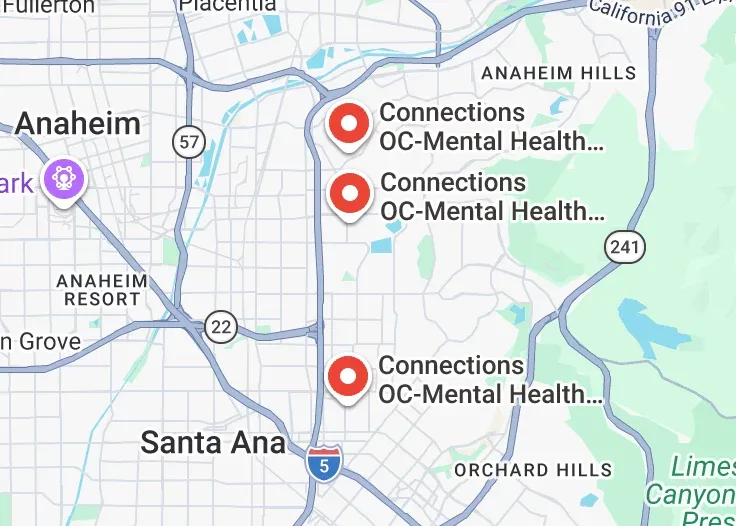
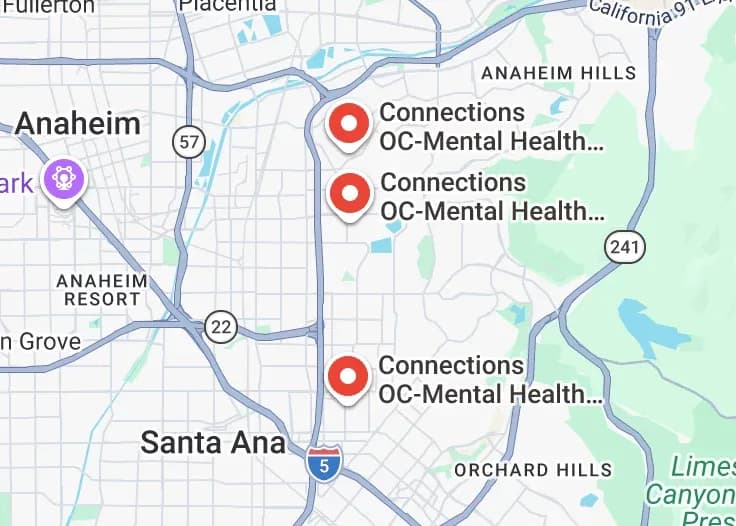
  • 17811 Bigelow Park, Tustin, CA 92780
  • 17841 Lincoln St Villa Park, CA 92861
  • 2403 N Shady Forest Ln Orange, CA 92867
  • Privacy Policy
  • Sitemap
About Us

About Us

Effective residential inpatient mental health treatment.

Get to know us
Who We Are
  • Staff
  • Our Facilities
Resources
  • Blog
  • FAQ
  • Insurance Verification
  • Reviews
Areas We Serve

Why I should relocate for rehab?

Menu CTA Image
Locations

Locations

Choose from our beautiful locations near beaches & national parks.

888-255-2112
California
  • Orange County
    Tustin, CATustin, CAVilla Park, CAVilla Park, CAOrange, CAOrange, CA
    Location Preview
Tustin, CATustin, CAVilla Park, CAVilla Park, CAOrange, CAOrange, CA
Location Preview
Tustin, CATustin, CAVilla Park, CAVilla Park, CAOrange, CAOrange, CA
Location Preview
Areas We Serve

Why I should relocate for rehab?

Menu CTA Image
Mental Health Disorders
Anxiety Disorders
  • Generalized Anxiety Disorder
  • Panic Disorder
  • Obsessive Compulsive Disorder
  • Social Anxiety Disorder
  • Agoraphobia
Mood Disorders
  • Depression Treatment (MentalHealth National)
  • Bipolar Disorder
  • Premenstrual Dysphoric Disorder
  • Disruptive Mood Dysregulation Disorder
  • Major Depressive Disorder
  • Persistent Depressive Disorder
  • Seasonal Affective Disorder
Trauma Disorders
  • Post Traumatic Stress Disorder
  • Adjustment Disorder
Personality Disorders
  • Borderline Personality Disorder
  • Antisocial Personality Disorder
  • Dissociative Identity Disorder
  • Histrionic Personality Disorder
  • Paranoid Personality Disorder
Psychotic Disorders
  • Schizophrenia
  • Schizoaffective Disorder
Neurodevelopment Disorder Treatment (MentalHealth National)
  • ADHD
Areas We Serve

Why I should relocate for rehab?

Menu CTA Image
Mental Health Treatment

Mental Health Treatment

Get dual-diagnosis treatment for SUD and mental health

888-255-2112
  • Cognitive Behavioral TherapyCognitive Behavioral Therapy
  • Dialectical Behavioral TherapyDialectical Behavioral Therapy
  • Seeking Safety TreatmentSeeking Safety Treatment
  • Motivational InterviewingMotivational Interviewing
  • Medication ManagementMedication Management
Areas We Serve

Why I should relocate for rehab?

Menu CTA Image
Contact
Verify Insurance
Call Now

Where Lasting Mental Health Treatment Truly Begins

Connect with our compassionate clinicians to get a personalized mental health treatment plan designed around your needs.
844-759-0999

Learn more about the individual mental health disorders we treat by clicking a button below.

Schizophrenia Disorder
Schizoaffective Disorder
Premenstrual Disphoric Disorder (PMDD)
Cyclothymia
Hypomania
Major Depressive Disorder (MDD)
Disruptive Mood Disregulation Disorder (DMDD)Disorder
Persistent Depressive Disorder (PDD)
ADHD
Social Anxiety Disorder
Major Depressive Disorder (MDD)
Disruptive Mood Disregulation Disorder (DMDD)Disorder
Persistent Depressive Disorder (PDD)
ADHD
Social Anxiety Disorder
Autism Spectrum Disorder (ASD)
Generalized Anxiety Disorder
Social Anxiety Disorder
Agoraphobia
Separation Anxiety Disorder
Dissociative Panic Disorder
Antisocial Personality Disorder
Paranoid Personality Disorder
Adjustment Disorder
Borderline Personality Disorder
USERJOURNEYGUIDE
Website GuideHand-picked pages that help our visitors
0 of 11 visited
  • 1Protect your job while you come to treatment+ Recommended next step
  • 2Can Insurance cover rehab treatment?
  • 3Why Traveling or Staying Close to home can both be great options.
  • 4Locations & Galleries
  • 5Staff page
  • 6Reviews
  • 7What to bring to treatment
  • 8Treatment & Therapies we provide
  • 9Admissions Process
  • 10Contact Us
  • 11Residential Inpatient vs Hospital Inpatient