About Us

About Us

Effective residential inpatient mental health treatment.

Get to know us
Who We Are
  • Staff
  • Our Facilities
Resources
  • Blog
  • FAQ
  • Insurance Verification
  • Reviews
Areas We Serve

Why I should relocate for rehab?

Menu CTA Image
Locations

Locations

Choose from our beautiful locations near beaches & national parks.

888-255-2112
California
  • Orange County
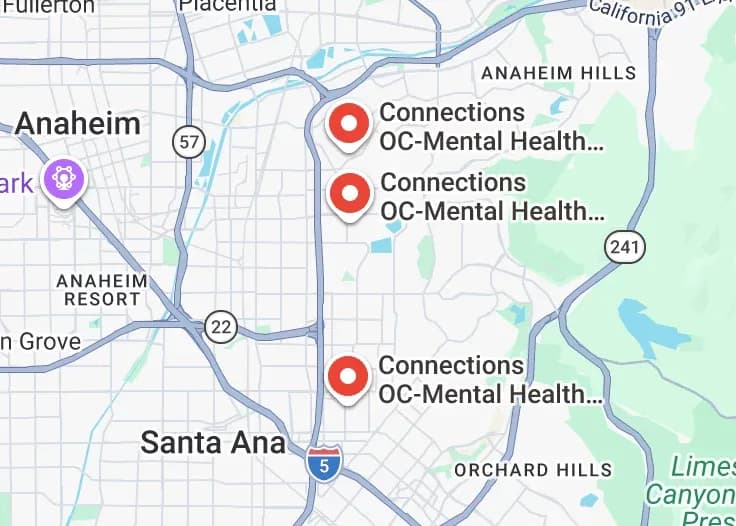
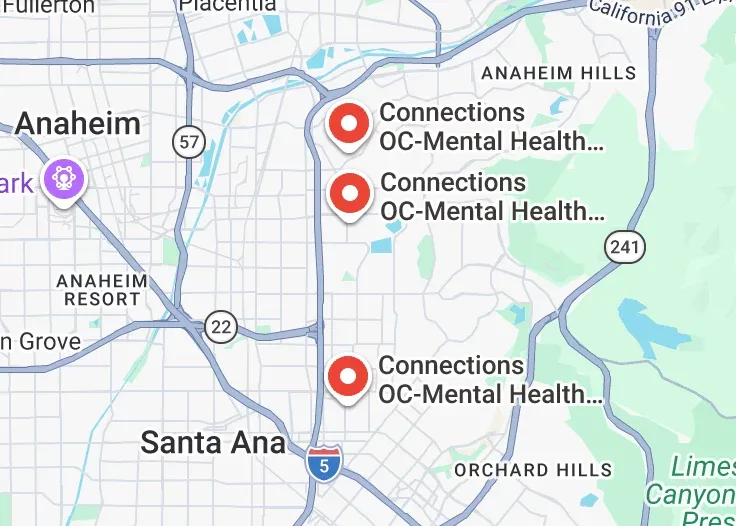
    Tustin, CATustin, CAVilla Park, CAVilla Park, CAOrange, CAOrange, CA
    Location Preview
Tustin, CATustin, CAVilla Park, CAVilla Park, CAOrange, CAOrange, CA
Location Preview
Tustin, CATustin, CAVilla Park, CAVilla Park, CAOrange, CAOrange, CA
Location Preview
Areas We Serve

Why I should relocate for rehab?

Menu CTA Image
Mental Health Disorders
Anxiety Disorders
  • Generalized Anxiety Disorder
  • Panic Disorder
  • Obsessive Compulsive Disorder
  • Social Anxiety Disorder
  • Agoraphobia
Mood Disorders
  • Depression Treatment (MentalHealth National)
  • Bipolar Disorder
  • Premenstrual Dysphoric Disorder
  • Disruptive Mood Dysregulation Disorder
  • Major Depressive Disorder
  • Persistent Depressive Disorder
  • Seasonal Affective Disorder
Trauma Disorders
  • Post Traumatic Stress Disorder
  • Adjustment Disorder
Personality Disorders
  • Borderline Personality Disorder
  • Antisocial Personality Disorder
  • Dissociative Identity Disorder
  • Histrionic Personality Disorder
  • Paranoid Personality Disorder
Psychotic Disorders
  • Schizophrenia
  • Schizoaffective Disorder
Neurodevelopment Disorder Treatment (MentalHealth National)
  • ADHD
Areas We Serve

Why I should relocate for rehab?

Menu CTA Image
Mental Health Treatment

Mental Health Treatment

Get dual-diagnosis treatment for SUD and mental health

888-255-2112
  • Cognitive Behavioral TherapyCognitive Behavioral Therapy
  • Dialectical Behavioral TherapyDialectical Behavioral Therapy
  • Seeking Safety TreatmentSeeking Safety Treatment
  • Motivational InterviewingMotivational Interviewing
  • Medication ManagementMedication Management
Areas We Serve

Why I should relocate for rehab?

Menu CTA Image
Contact
657-298-1982
657-298-1982
Skip to content

Paranoid Schizophrenia: Causes, Signs, & Treatment

Picture of Written By:
Written By:

Matthew D'Ursov

Picture of Content Manager:
Content Manager:

Amy Leifeste

Picture of Editor:
Editor:

Karena Mathis

Posted On
July 19, 2024

Treatment Guidance Website Tour

After reading this current page, click on the next page we recommend here, or at the bottom of this page.

Paranoid schizophrenia is an old term that experts no longer use. APA (American Psychiatric Association) stopped using it in 2013, and other organizations have followed suit. Despite the change, paranoia remains a key symptom in diagnosing and treating schizophrenia.

Read on to learn more about this challenging condition and find out how to get effective mental health treatment.

What Is Paranoid Schizophrenia?

Paranoid schizophrenia used to describe a type of schizophrenia, but now it’s just called schizophrenia. This condition is part of a group of mental health issues that involve psychosis.

In 2013, APA updated its guidebook – DSM-5 – and dropped the term paranoid schizophrenia. In 2019, the World Health Organization did the same in their guidebook, ICD-11.

Schizophrenia affects various parts of your brain, changing how you think, remember, and sense the world. People with schizophrenia often struggle to tell what’s real from what’s not. They might see or hear things that aren’t there (hallucinations) and believe things that aren’t true (delusions). They can also have trouble organizing their thoughts.

Symptoms of Paranoid Schizophrenia

Schizophrenia usually occurs in three stages, with the active stage being the most intense. The main symptoms include:

  • Delusions
  • Hallucinations
  • Disorganized or incoherent speech
  • Disorganized or unusual behavior
  • Negative symptoms
  • Paranoia

Delusions and hallucinations

These two symptoms can involve paranoia.

  • Delusions: These are strong false beliefs that don’t change, even with clear evidence against them. Paranoid delusions often mean believing someone is trying to harm them.
  • Hallucinations: Things a person imagines seeing or hearing that aren’t there. Hallucinations can make delusions worse by giving the person more “evidence” that someone is trying to harm them.

Two women sit in a counseling session, depicting examples of goals for therapy

3 Causes of Paranoid Schizophrenia

Schizophrenia doesn’t have a single cause. Experts think several factors might play a role, but none of these guarantees someone will develop schizophrenia. Here are three main reasons it might happen:

  1. Chemical imbalances in the brain: The brain uses chemicals to send messages between brain cells. An imbalance in these chemicals might contribute to schizophrenia.
  2. Brain development problems: Problems that affect the brain’s development before birth can play a role.
  3. Communication issues in the brain: The brain relies on connection networks to work properly. If these connections break down, it might lead to schizophrenia.

Several risk factors might increase the chance of developing schizophrenia, including genetic mutations, exposure to certain chemicals, complications during pregnancy, and recreational drug use. However, no confirmed triggers or causes have been found. Understanding these factors can help find better treatments and support for those affected.

How Paranoid Schizophrenia Is Diagnosed

A healthcare provider, usually a psychiatrist, diagnoses schizophrenia using a combination of tools and techniques:

  • Analyzing medical and personal history: The doctor will look at your medical history and ask about your personal life to understand your past health issues and experiences.
  • Asking about experiences and symptoms: The doctor will ask about your feelings and experiences, including delusions, hallucinations, or unusual behaviors.
  • Observing behavior: The doctor will observe your actions and behavior to see signs of schizophrenia.

To diagnose schizophrenia, doctors look for:

  • At least two of the five main symptoms (delusions, hallucinations, disorganized speech, disorganized behavior, and negative symptoms).
  • Symptoms that have lasted at least one month, with overall effects lasting at least six months.
  • Disruption in your social or work life.

Tests to rule out other conditions

  • Imaging tests: CT and MRI scans take pictures to look for physical problems in the brain.
  • Blood, urine, and spinal fluid tests: These check for chemical changes, infections, or heavy metal poisoning.
  • Brain activity testing: EEG checks the electrical activity in your brain to rule out problems like seizures.

Combining these methods helps doctors accurately diagnose schizophrenia and rule out other conditions that might cause similar symptoms. If you or someone you know is experiencing symptoms, see a healthcare provider for a proper diagnosis and treatment plan.

Why Proper Treatment Is Essential for Paranoid Schizophrenia

Proper treatment is essential for people with schizophrenia. Without it, symptoms can worsen and make everyday life difficult.

Improving quality of life

Treatment can reduce symptoms like delusions and hallucinations, making it easier to work, study, and enjoy daily activities.

Preventing relapses

Ongoing treatment reduces the likelihood of severe episodes that can disrupt life.

Building strong relationships

Proper treatment helps improve communication and build stronger relationships with family and friends.

Maintaining independence

Treatment helps manage daily tasks and live more independently.

Preventing harm

Without treatment, schizophrenia symptoms can lead to dangerous behaviors.

Supporting long-term recovery

People can manage their symptoms and work towards long-term recovery with the right care.

If you or someone you know has schizophrenia, seek help from a healthcare provider. Proper treatment can make a big difference and help people lead healthier, more fulfilled lives.

two people embracing, depicting learning about what is paranoid schizophrenia

Get Science-Backed, Empathetic Mental Health Help at Connections

If you need compassionate and effective mental health treatment, reach out to Connections in Southern California. We offer inpatient programs for paranoid schizophrenia and other conditions at our treatment center by the beach.

Small groups of just six people give you personal attention and peer support.

All mental health conditions are different, so all our treatment programs provide personalized therapies. This may include medications, talk therapy, counseling, family therapy, and holistic treatments.

Call our compassionate team today at 844-759-0999.

PrevPrevious Post
Next PostNext

Related Articles

January 16, 2026

Does Insurance Cover Residential Mental Health Treatment?

October 7, 2025

Why Do I Feel Like Everyone Hates Me?

September 18, 2025

Overstimulated Meaning

Share This Article

Related Blogs

Check out our addiction recovery blog to learn more about substance use disorders and how to get effective treatment.

Does Insurance Cover Residential Mental Health Treatment?

What Is the Goal of Therapy?

Why Do I Feel Like Everyone Hates Me? Tips & What to Do

What Are Common Signs of Overstimulation in Adults?

What to Expect at an Inpatient Behavioral Health Hospital

Residential vs. Inpatient Mental Health Treatment

How to Admit Yourself to a Mental Hospital?

When To Seek Inpatient Mental Health Treatment At A Hospital

Inpatient Mental Health Crisis Treatment

How Long is Residential Mental Health Treatment?

What is Real Event OCD? Signs, Symptoms, and Treatment

What Is Harm OCD? Signs, Symptoms, and Treatment

Why Do I Zone Out So Much? Causes & What To Do

Sertraline (Zoloft) - Uses, Side Effects, and More

What is existential OCD: Signs, Symptoms, Triggers, & Treatment

Hyperfixation vs. Obsession: What’s the difference?

Am I Going Crazy? Understanding Your Mental Health Concerns

Are Your Nightmares Actually Trying to Warn You About Something?

What Is Obsessive Love Disorder? Symptoms, Causes, & Treatment

What Is Hyperfixations? How to Manage It

Best Residential Outpatient Rehab Mental Health Centers in the Country

Best Residential IOP Rehab Mental Health Centers in the Country

Best Residential DBT Therapy Mental Health Centers in the Country

Best Residential EMDR Therapy Mental Health Centers in the Country

Best Residential Depression Treatment Mental Health Centers in the Country

Depression Treatment near Yorba Linda (Residential Mental Health Treatment Centers)

Depression Treatment near Westminster (Residential Mental Health Treatment Centers)

Villa Park Depression Treatment (Residential Mental Health Treatment Centers)

Tustin Depression Treatment (Residential Mental Health Treatment Centers)

Depression Treatment near Stanton (Residential Mental Health Treatment Centers)

Depression Treatment near Seal Beach (Residential Mental Health Treatment Centers)

Depression Treatment near Santa Ana (Residential Mental Health Treatment Centers)

Depression Treatment near San Juan Capistrano (Residential Mental Health Treatment Centers)

Depression Treatment near San Clemente (Residential Mental Health Treatment Centers)

Depression Treatment near Rancho Santa Margarita (Residential Mental Health Treatment Centers)

Rehabs near Orange County FAQs

What types of mental health programs are available in Orange County?

Mental health programs near Orange County offer a full continuum of care, including inpatient treatment, partial hospitalization (PHP), intensive outpatient (IOP), and standard outpatient (OP) services. Whether you’re looking for structured care or flexible support, mental health treatment programs are designed to meet a range of needs.

How do I know if I need mental health treatment near Orange County?

If you’re experiencing persistent feelings of anxiety, depression, stress, mood changes, difficulty coping with daily responsibilities, or emotional challenges that are affecting your work, relationships, or overall well-being, it may be time to seek professional support. A mental health assessment can help determine the level of care that’s right for you and connect you with the appropriate treatment options.

What mental health conditions are treated at Orange County mental health centers?

Mental health treatment centers in Orange County commonly provide care for conditions such as anxiety disorders, depression, bipolar disorder, PTSD, trauma-related disorders, OCD, mood disorders, and other emotional or behavioral health concerns. Treatment plans are personalized to each individual’s unique needs, goals, and clinical recommendations.

Will my insurance cover mental health treatment in Orange County?

Many major insurance providers offer coverage for mental health services, including partial hospitalization (PHP), intensive outpatient (IOP), and outpatient treatment programs. Coverage varies by plan, so verifying your benefits with the treatment center can help you understand your available options and any potential out-of-pocket costs.


Website Guide Progress...

What most patients want to know before they book

1Protect your job while you come to treatmentNEXT2Can Insurance cover rehab treatment?NEXT3Why Traveling or Staying Close to home can both be great options.NEXT4Locations & GalleriesNEXT5Staff pageNEXT6ReviewsNEXT7What to bring to treatmentNEXT8Treatment & Therapies we provideNEXT9Admissions ProcessNEXT10Contact UsNEXT11Residential Inpatient vs Hospital InpatientNEXT

You’re Not Alone.

Get treatment from a team of expert staff who is passionate about helping you experience peace.

Call Now
an image of the Connections Mental Health logo

Tustin
DHCS # MHBL240478
Exp 1/10/27

Joint Commission HCO ID: 690880
Effective Date: 3/8/2025

Villa Park
DHCS #MHBL240509
Exp 9/4/26

Joint Commission HCO ID: 690880
Effective Date: 3/8/2025

Orange
DHCS #MHBT260570
Exp 4/8/27

Joint Commission HCO ID: 690880
Effective Date: 3/8/2025

  • 17811 Bigelow Park, Tustin, CA 92780
  • 17841 Lincoln St Villa Park, CA 92861
  • 2403 N Shady Forest Ln Orange, CA 92867
  • Privacy Policy
  • Sitemap
About Us

About Us

Effective residential inpatient mental health treatment.

Get to know us
Who We Are
  • Staff
  • Our Facilities
Resources
  • Blog
  • FAQ
  • Insurance Verification
  • Reviews
Areas We Serve

Why I should relocate for rehab?

Menu CTA Image
Locations

Locations

Choose from our beautiful locations near beaches & national parks.

888-255-2112
California
  • Orange County
    Tustin, CATustin, CAVilla Park, CAVilla Park, CAOrange, CAOrange, CA
    Location Preview
Tustin, CATustin, CAVilla Park, CAVilla Park, CAOrange, CAOrange, CA
Location Preview
Tustin, CATustin, CAVilla Park, CAVilla Park, CAOrange, CAOrange, CA
Location Preview
Areas We Serve

Why I should relocate for rehab?

Menu CTA Image
Mental Health Disorders
Anxiety Disorders
  • Generalized Anxiety Disorder
  • Panic Disorder
  • Obsessive Compulsive Disorder
  • Social Anxiety Disorder
  • Agoraphobia
Mood Disorders
  • Depression Treatment (MentalHealth National)
  • Bipolar Disorder
  • Premenstrual Dysphoric Disorder
  • Disruptive Mood Dysregulation Disorder
  • Major Depressive Disorder
  • Persistent Depressive Disorder
  • Seasonal Affective Disorder
Trauma Disorders
  • Post Traumatic Stress Disorder
  • Adjustment Disorder
Personality Disorders
  • Borderline Personality Disorder
  • Antisocial Personality Disorder
  • Dissociative Identity Disorder
  • Histrionic Personality Disorder
  • Paranoid Personality Disorder
Psychotic Disorders
  • Schizophrenia
  • Schizoaffective Disorder
Neurodevelopment Disorder Treatment (MentalHealth National)
  • ADHD
Areas We Serve

Why I should relocate for rehab?

Menu CTA Image
Mental Health Treatment

Mental Health Treatment

Get dual-diagnosis treatment for SUD and mental health

888-255-2112
  • Cognitive Behavioral TherapyCognitive Behavioral Therapy
  • Dialectical Behavioral TherapyDialectical Behavioral Therapy
  • Seeking Safety TreatmentSeeking Safety Treatment
  • Motivational InterviewingMotivational Interviewing
  • Medication ManagementMedication Management
Areas We Serve

Why I should relocate for rehab?

Menu CTA Image
Contact
Verify Insurance
Call Now

Where Lasting Mental Health Treatment Truly Begins

Connect with our compassionate clinicians to get a personalized mental health treatment plan designed around your needs.
844-759-0999

Learn more about the individual mental health disorders we treat by clicking a button below.

Schizophrenia Disorder
Schizoaffective Disorder
Premenstrual Disphoric Disorder (PMDD)
Cyclothymia
Hypomania
Major Depressive Disorder (MDD)
Disruptive Mood Disregulation Disorder (DMDD)Disorder
Persistent Depressive Disorder (PDD)
ADHD
Social Anxiety Disorder
Major Depressive Disorder (MDD)
Disruptive Mood Disregulation Disorder (DMDD)Disorder
Persistent Depressive Disorder (PDD)
ADHD
Social Anxiety Disorder
Autism Spectrum Disorder (ASD)
Generalized Anxiety Disorder
Social Anxiety Disorder
Agoraphobia
Separation Anxiety Disorder
Dissociative Panic Disorder
Antisocial Personality Disorder
Paranoid Personality Disorder
Adjustment Disorder
Borderline Personality Disorder
USERJOURNEYGUIDE
Website GuideHand-picked pages that help our visitors
0 of 11 visited
  • 1Protect your job while you come to treatment+ Recommended next step
  • 2Can Insurance cover rehab treatment?
  • 3Why Traveling or Staying Close to home can both be great options.
  • 4Locations & Galleries
  • 5Staff page
  • 6Reviews
  • 7What to bring to treatment
  • 8Treatment & Therapies we provide
  • 9Admissions Process
  • 10Contact Us
  • 11Residential Inpatient vs Hospital Inpatient