
About Us

About Us

Effective residential inpatient mental health treatment.

Get to know us
Who We Are
  • Staff
  • Our Facilities
Resources
  • Blog
  • FAQ
  • Insurance Verification
  • Reviews
Areas We Serve

Why I should relocate for rehab?

Menu CTA Image
Locations

Locations

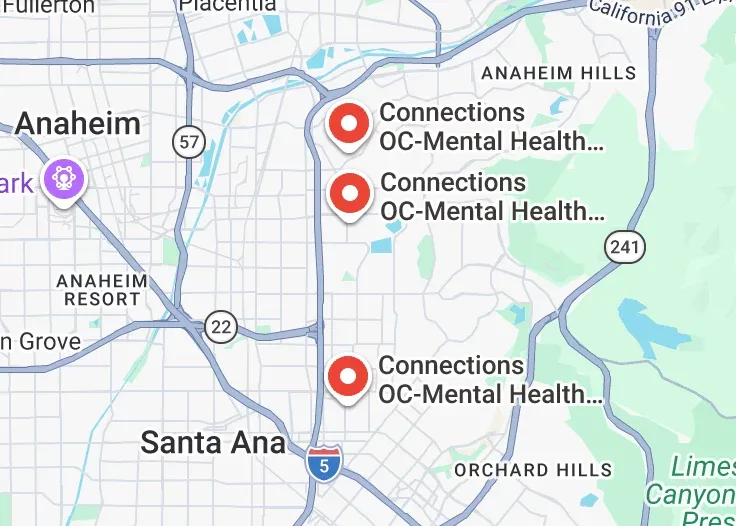
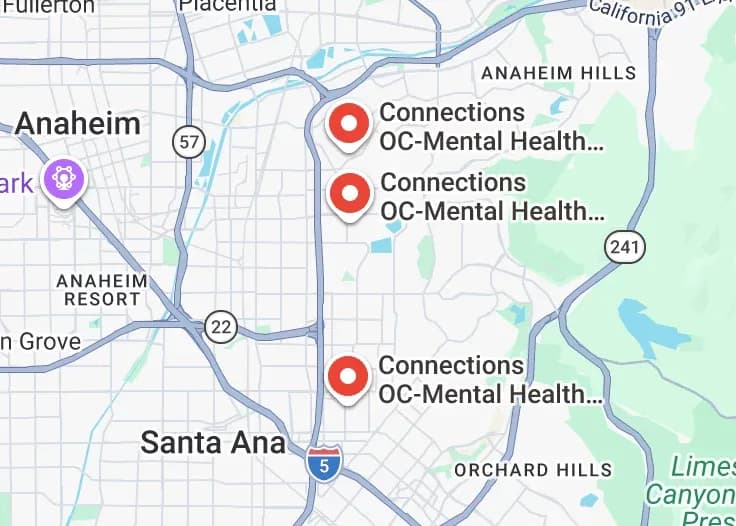
Choose from our beautiful locations near beaches & national parks.

888-255-2112
California
  • Orange County
    Tustin, CATustin, CAVilla Park, CAVilla Park, CAOrange, CAOrange, CA
    Location Preview
Tustin, CATustin, CAVilla Park, CAVilla Park, CAOrange, CAOrange, CA
Location Preview
Tustin, CATustin, CAVilla Park, CAVilla Park, CAOrange, CAOrange, CA
Location Preview
Areas We Serve

Why I should relocate for rehab?

Menu CTA Image
Mental Health Disorders
Anxiety Disorders
  • Generalized Anxiety Disorder
  • Panic Disorder
  • Obsessive Compulsive Disorder
  • Social Anxiety Disorder
  • Agoraphobia
Mood Disorders
  • Depression Treatment (MentalHealth National)
  • Bipolar Disorder
  • Premenstrual Dysphoric Disorder
  • Disruptive Mood Dysregulation Disorder
  • Major Depressive Disorder
  • Persistent Depressive Disorder
  • Seasonal Affective Disorder
Trauma Disorders
  • Post Traumatic Stress Disorder
  • Adjustment Disorder
Personality Disorders
  • Borderline Personality Disorder
  • Antisocial Personality Disorder
  • Dissociative Identity Disorder
  • Histrionic Personality Disorder
  • Paranoid Personality Disorder
Psychotic Disorders
  • Schizophrenia
  • Schizoaffective Disorder
Neurodevelopment Disorder Treatment (MentalHealth National)
  • ADHD
Areas We Serve

Why I should relocate for rehab?

Menu CTA Image
Mental Health Treatment

Mental Health Treatment

Get dual-diagnosis treatment for SUD and mental health

888-255-2112
  • Cognitive Behavioral TherapyCognitive Behavioral Therapy
  • Dialectical Behavioral TherapyDialectical Behavioral Therapy
  • Seeking Safety TreatmentSeeking Safety Treatment
  • Motivational InterviewingMotivational Interviewing
  • Medication ManagementMedication Management
Areas We Serve

Why I should relocate for rehab?

Menu CTA Image
Contact
657-298-1982
657-298-1982
Skip to content

What Is Blunted Affect?

Picture of Written By:
Written By:

Matthew D'Ursov

Picture of Content Manager:
Content Manager:

Amy Leifeste

Picture of Editor:
Editor:

Karena Mathis

Posted On
April 18, 2024

Treatment Guidance Website Tour

After reading this current page, click on the next page we recommend here, or at the bottom of this page.

Blunted affect involves someone demonstrating a diminished capacity to convey emotions via facial expressions, vocal tone, and body movements. Affect blunting is associated with various diseases and disorders. Read on to learn more about this state..

What Causes Affect Blunting?

Affect is a clinical term used in psychology to describe the expression of emotions through gestures, facial expressions, vocal tone, and body language. Individuals with blunted effect display emotions much less vividly than the average person.

When someone has a blunted effect, their external demeanor may give the impression of a lack of intense emotions, even during discussions about emotional issues. This creates a disconnect between the emotions the person actually feels and what others perceive.

Blunted affect should not be confused with emotional blunting, where a person experiences a diminished intensity of emotions or feels emotionally numb. It is possible for someone to display a blunted effect – that is, showing minimal emotional expression – regardless of whether they are experiencing emotional blunting.

Emotional expression varies widely from person to person, ranging from:

  • Flat affect: Showing almost no signs of emotional expression.
  • Blunted affect: Displaying very limited emotional expression.
  • Constricted affect: Exhibiting some emotional expression, but less than what is typically observed in others.

The precise cause of blunted affect remains unclear, but it may involve aspects of brain function, including potential underactivity in areas like the sensorimotor system or the amygdala.

Although blunted affect is often linked with schizophrenia, there are various other conditions that can lead to this emotional expression pattern.

  • Schizophrenia: Schizophrenia is most frequently associated with a blunted or flat affect, considered one of its negative symptoms, indicating a reduction or absence of emotional expression. Individuals with schizophrenia show reduced capabilities in expressing and perceiving emotions in others.
  • Depression: Depression (major depressive disorder) varies in intensity from person to person. Blunted affect sometimes manifests as a symptom of depression. This includes a diminished emotional response and possibly anhedonia – the inability to experience pleasure.
  • Autism spectrum disorder: Individuals on the autistic spectrum may struggle with expressing emotions or understanding social cues, sometimes appearing to have a blunted affect.
  • Dementia: Alterations in the frontal and temporal lobes due to certain types of dementia can trigger a behavioral manifestation of flat or blunted affect. The progression of dementia might include symptoms like communication challenges and a noticeable reduction in facial expressions.
  • Parkinson’s disease: A masked face, or hypomimia, is a symptom seen in some people with Parkinson’s disease, reflecting a gradual loss of facial expressiveness and presenting as a blunted affect.
  • Facial paralysis associated with muscle disorders: Conditions causing facial paralysis – strokes or other muscle disorders, for instance – can result in an appearance similar to a blunted affect, due to the physical limitation in facial movement.
  • TBI (traumatic brain injury): Behavioral changes are common in those with traumatic brain injuries, with some people exhibiting a blunted affect. This could range from rapid shifts in emotional expression to a sustained lack of it.
  • Schizoid personality disorder: Schizoid personality disorder features symptoms that overlap with schizophrenia, including a tendency to avoid social interactions and display emotional detachment or a blunted affect, as outlined in DSM-5-TR (Diagnostic and Statistical Manual of Mental Disorders).
  • Antidepressants: Some people taking antidepressants report the emergence of a blunted effect during therapy.

image of woman representing blunted affect definition

Symptoms of Blunted Affect

Experiencing a blunted affect doesn’t imply an absence of emotions. Rather, it signifies a discrepancy between internal feelings and external expressions. As an example, consider a scenario where you’re greeted with a surprise party by your friends. Internally, you might be overwhelmed with shock and joy, yet your external demeanor might seem indifferent or unenthusiastic.

Key indicators of a blunted affect encompass:

  • Demeanor that suggests disinterest
  • Avoidance of eye contact
  • Body language and nonverbal signals that convey apathy
  • Facial expressions that remain unchanged
  • Speaking in a monotone or unvarying voice
  • Absence of expressive hand movements

Prevention & Treatment for Blunted Affect

Addressing blunted affect involves a combination of understanding its underlying causes and implementing targeted interventions. While prevention may be challenging due to the varied and sometimes uncontrollable factors leading to blunted affect, there are strategies for managing and treating this condition effectively.

Preventative measures for blunted affect primarily focus on mitigating risk factors associated with its underlying causes. These can include:

  • Mental health maintenance: Regular mental health check-ups can help identify and treat disorders like depression or anxiety early on, potentially preventing the development of blunted affect.
  • Stress management: Developing healthy coping mechanisms for stress, such as through exercise, meditation, or therapy, can reduce the risk of conditions that contribute to blunted affect.
  • Avoidance of substance misuse: Substance abuse can trigger or inflame mental health issues linked to blunted affect, so maintaining a healthy lifestyle and seeking help for substance misuse can mitigate this.

Treatment for blunted affect depends on its underlying cause. A multi-pronged approach may be necessary for comprehensive care:

  • Medication adjustment: If blunted affect is a side effect of medication, such as certain antidepressants, consulting with a healthcare provider about adjusting the dosage or switching medications may be beneficial.
  • Psychotherapy: CBT (cognitive behavioral therapy) and other forms of psychotherapy can be effective in treating the root mental health conditions causing blunted affect. These therapies can also help people develop more expressive communication skills.
  • Social skills training: For conditions like autism spectrum disorder or schizophrenia, social skills training can help people learn to recognize and express emotions more effectively.
  • Physical therapy: In cases where blunted affect stems from physical issues like facial paralysis, physical therapy can help improve facial muscle control and expression.
  • Supportive care: Support groups and family therapy can provide social support, enhancing emotional expression and helping to address the social implications of blunted affect.
  • Ongoing support: Continuous monitoring by healthcare professionals is important for adjusting treatment plans as necessary and ensuring that interventions are effective. Support from friends, family, and peer support groups can also play important roles in the individual’s journey toward improved emotional expression.

FAQs

What is blunted affect?

Blunted affect definition is when someone has a reduced capacity to show emotions through their facial expressions, vocal tone, or body movements.

How do blunted vs flat affect compare?

Flat effect is a total absence of expression, regardless of how happy or sad the situation or experience. Blunt effect, by contrast, involves decreased emotional range, although someone whose affect is blunted may still exhibit some mild reactions.

people hugging each other representing what is blunted affect

Get Compassionate Treatment for Blunted Affect at Connections

If you are suffering from any kind of mental health issue, reach out to Connections in Southern California. We offer immersive and inclusive inpatient mental health treatment at our luxury beachside facility.

We deliberately limit intake at our treatment center, admitting no more than six people at any one time. this enables you to get plenty of personalized attention, while still benefiting from the support of peers grappling with similar challenges.

During inpatient treatment at Connections, you can engage with an individualized array of treatments. These may include medication management, talk therapy, motivational therapy, counseling, family therapy, and holistic interventions.

When you are ready to improve well-being and restore functioning, call Connections at 844-759-0999.

PrevPrevious Post
Next PostNext

Related Articles

January 16, 2026

Does Insurance Cover Residential Mental Health Treatment?

October 7, 2025

Why Do I Feel Like Everyone Hates Me?

September 18, 2025

Overstimulated Meaning

Share This Article

Related Blogs

Check out our addiction recovery blog to learn more about substance use disorders and how to get effective treatment.

Rehabs near Orange County FAQs

What types of mental health programs are available in Orange County?

Mental health programs near Orange County offer a full continuum of care, including inpatient treatment, partial hospitalization (PHP), intensive outpatient (IOP), and standard outpatient (OP) services. Whether you’re looking for structured care or flexible support, mental health treatment programs are designed to meet a range of needs.

How do I know if I need mental health treatment near Orange County?

If you’re experiencing persistent feelings of anxiety, depression, stress, mood changes, difficulty coping with daily responsibilities, or emotional challenges that are affecting your work, relationships, or overall well-being, it may be time to seek professional support. A mental health assessment can help determine the level of care that’s right for you and connect you with the appropriate treatment options.

What mental health conditions are treated at Orange County mental health centers?

Mental health treatment centers in Orange County commonly provide care for conditions such as anxiety disorders, depression, bipolar disorder, PTSD, trauma-related disorders, OCD, mood disorders, and other emotional or behavioral health concerns. Treatment plans are personalized to each individual’s unique needs, goals, and clinical recommendations.

Will my insurance cover mental health treatment in Orange County?

Many major insurance providers offer coverage for mental health services, including partial hospitalization (PHP), intensive outpatient (IOP), and outpatient treatment programs. Coverage varies by plan, so verifying your benefits with the treatment center can help you understand your available options and any potential out-of-pocket costs.

Website Guide Progress...

What most patients want to know before they book

1Protect your job while you come to treatmentNEXT2Can Insurance cover rehab treatment?NEXT3Why Traveling or Staying Close to home can both be great options.NEXT4Locations & GalleriesNEXT5Staff pageNEXT6ReviewsNEXT7What to bring to treatmentNEXT8Treatment & Therapies we provideNEXT9Admissions ProcessNEXT10Contact UsNEXT11Residential Inpatient vs Hospital InpatientNEXT

You’re Not Alone.

Get treatment from a team of expert staff who is passionate about helping you experience peace.

Call Now
an image of the Connections Mental Health logo

Tustin
DHCS # MHBL240478
Exp 1/10/27

Joint Commission HCO ID: 690880
Effective Date: 3/8/2025

Villa Park
DHCS #MHBL240509
Exp 9/4/26

Joint Commission HCO ID: 690880
Effective Date: 3/8/2025

Orange
DHCS #MHBT260570
Exp 4/8/27

Joint Commission HCO ID: 690880
Effective Date: 3/8/2025

  • 17811 Bigelow Park, Tustin, CA 92780
  • 17841 Lincoln St Villa Park, CA 92861
  • 2403 N Shady Forest Ln Orange, CA 92867
  • Privacy Policy
  • Sitemap
About Us

About Us

Effective residential inpatient mental health treatment.

Get to know us
Who We Are
  • Staff
  • Our Facilities
Resources
  • Blog
  • FAQ
  • Insurance Verification
  • Reviews
Areas We Serve

Why I should relocate for rehab?

Menu CTA Image
Locations

Locations

Choose from our beautiful locations near beaches & national parks.

888-255-2112
California
  • Orange County
    Tustin, CATustin, CAVilla Park, CAVilla Park, CAOrange, CAOrange, CA
    Location Preview
Tustin, CATustin, CAVilla Park, CAVilla Park, CAOrange, CAOrange, CA
Location Preview
Tustin, CATustin, CAVilla Park, CAVilla Park, CAOrange, CAOrange, CA
Location Preview
Areas We Serve

Why I should relocate for rehab?

Menu CTA Image
Mental Health Disorders
Anxiety Disorders
  • Generalized Anxiety Disorder
  • Panic Disorder
  • Obsessive Compulsive Disorder
  • Social Anxiety Disorder
  • Agoraphobia
Mood Disorders
  • Depression Treatment (MentalHealth National)
  • Bipolar Disorder
  • Premenstrual Dysphoric Disorder
  • Disruptive Mood Dysregulation Disorder
  • Major Depressive Disorder
  • Persistent Depressive Disorder
  • Seasonal Affective Disorder
Trauma Disorders
  • Post Traumatic Stress Disorder
  • Adjustment Disorder
Personality Disorders
  • Borderline Personality Disorder
  • Antisocial Personality Disorder
  • Dissociative Identity Disorder
  • Histrionic Personality Disorder
  • Paranoid Personality Disorder
Psychotic Disorders
  • Schizophrenia
  • Schizoaffective Disorder
Neurodevelopment Disorder Treatment (MentalHealth National)
  • ADHD
Areas We Serve

Why I should relocate for rehab?

Menu CTA Image
Mental Health Treatment

Mental Health Treatment

Get dual-diagnosis treatment for SUD and mental health

888-255-2112
  • Cognitive Behavioral TherapyCognitive Behavioral Therapy
  • Dialectical Behavioral TherapyDialectical Behavioral Therapy
  • Seeking Safety TreatmentSeeking Safety Treatment
  • Motivational InterviewingMotivational Interviewing
  • Medication ManagementMedication Management
Areas We Serve

Why I should relocate for rehab?

Menu CTA Image
Contact
Verify Insurance
Call Now

Where Lasting Mental Health Treatment Truly Begins

Connect with our compassionate clinicians to get a personalized mental health treatment plan designed around your needs.
844-759-0999

Learn more about the individual mental health disorders we treat by clicking a button below.

Schizophrenia Disorder
Schizoaffective Disorder
Premenstrual Disphoric Disorder (PMDD)
Cyclothymia
Hypomania
Major Depressive Disorder (MDD)
Disruptive Mood Disregulation Disorder (DMDD)Disorder
Persistent Depressive Disorder (PDD)
ADHD
Social Anxiety Disorder
Major Depressive Disorder (MDD)
Disruptive Mood Disregulation Disorder (DMDD)Disorder
Persistent Depressive Disorder (PDD)
ADHD
Social Anxiety Disorder
Autism Spectrum Disorder (ASD)
Generalized Anxiety Disorder
Social Anxiety Disorder
Agoraphobia
Separation Anxiety Disorder
Dissociative Panic Disorder
Antisocial Personality Disorder
Paranoid Personality Disorder
Adjustment Disorder
Borderline Personality Disorder
USERJOURNEYGUIDE
Website GuideHand-picked pages that help our visitors
0 of 11 visited
  • 1Protect your job while you come to treatment+ Recommended next step
  • 2Can Insurance cover rehab treatment?
  • 3Why Traveling or Staying Close to home can both be great options.
  • 4Locations & Galleries
  • 5Staff page
  • 6Reviews
  • 7What to bring to treatment
  • 8Treatment & Therapies we provide
  • 9Admissions Process
  • 10Contact Us
  • 11Residential Inpatient vs Hospital Inpatient